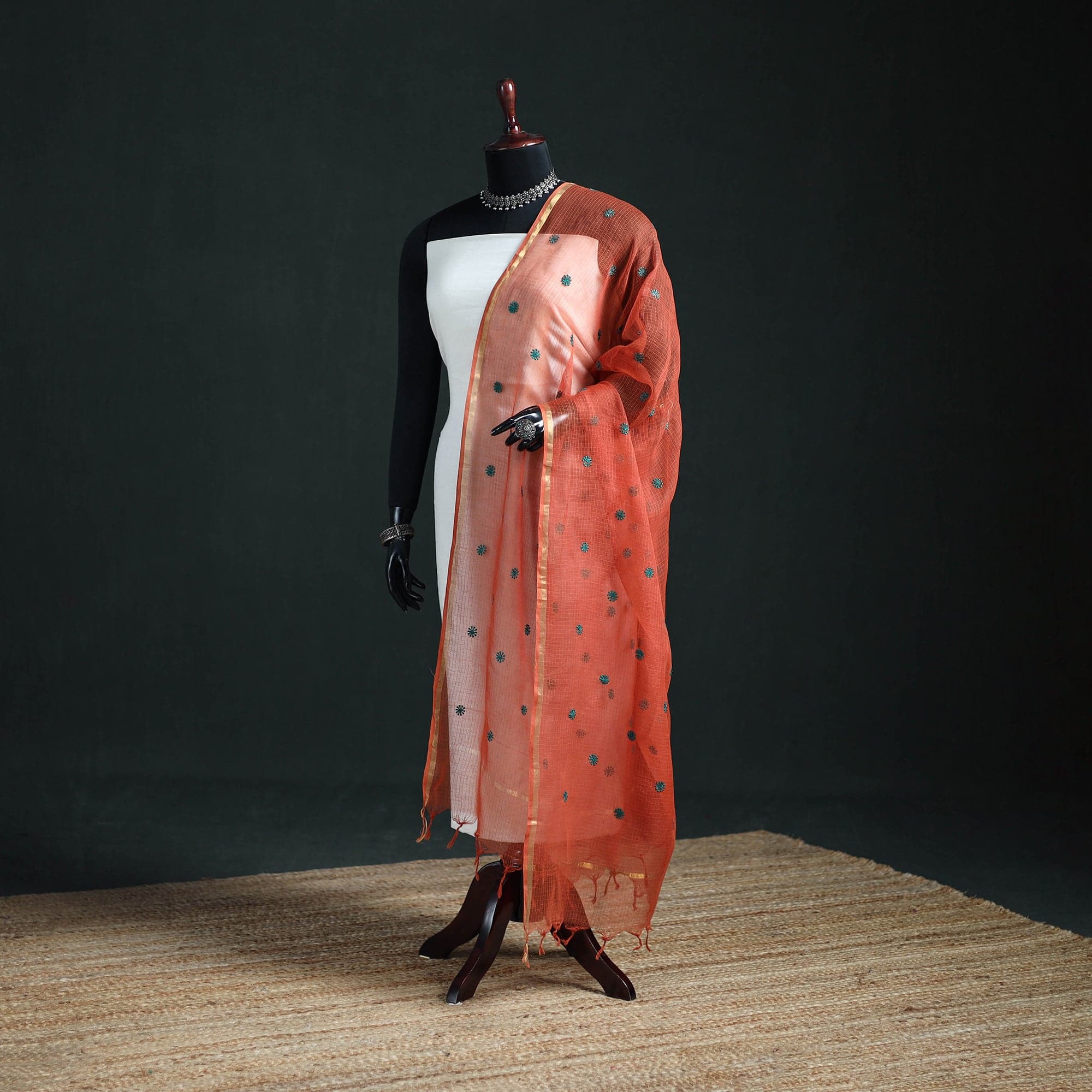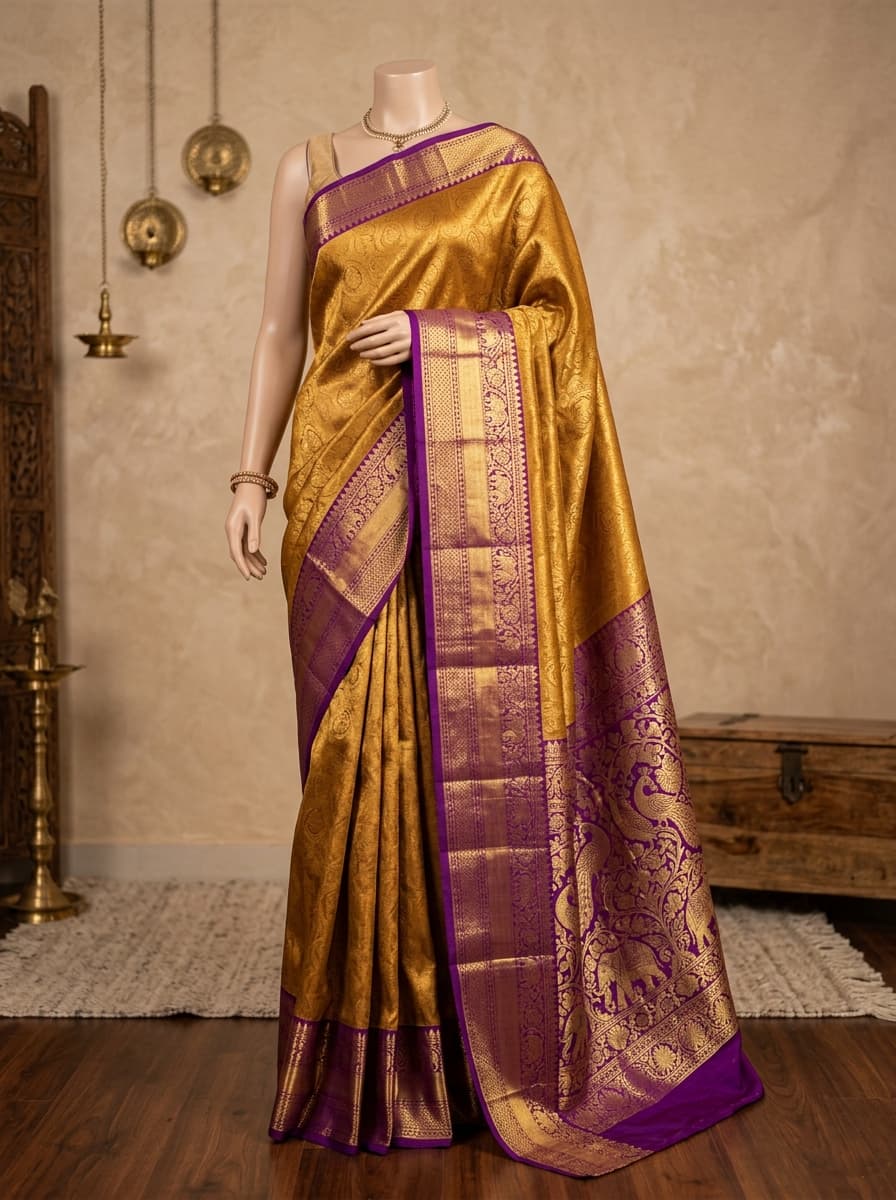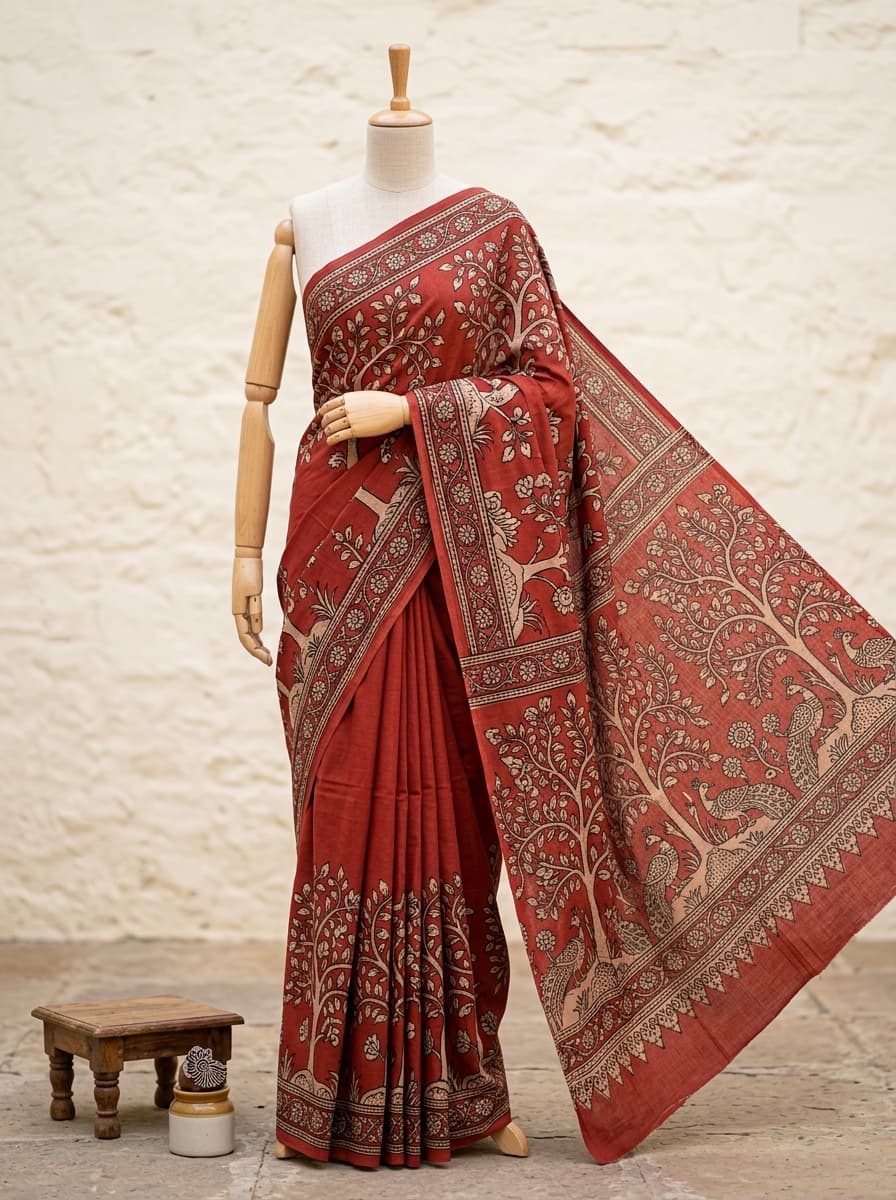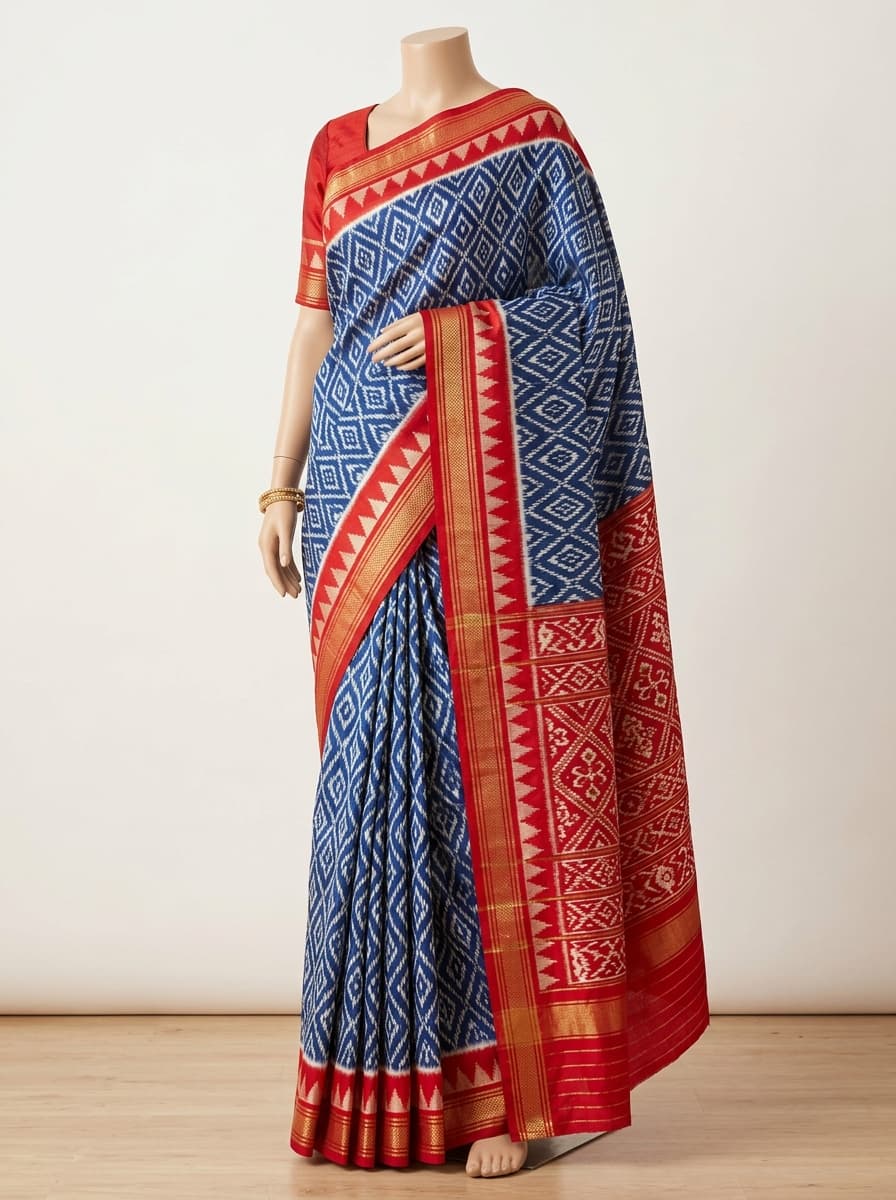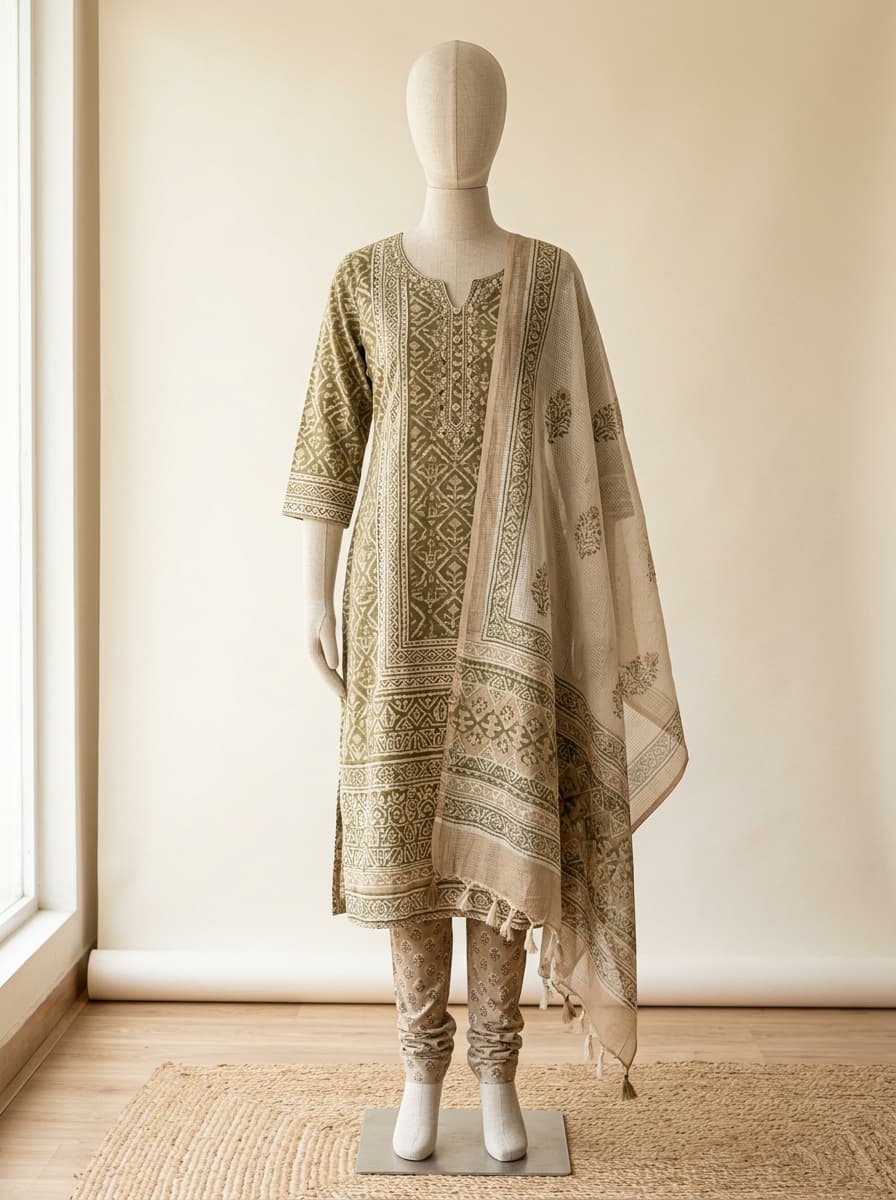
In a world of fast fashion and disposable clothing, choosing slow, handwoven textiles is a quiet act of rebellion. It is a vote for sustainability, human dignity, and the endurance of ancient heritage.
The Real Cost of Mechanical Speed
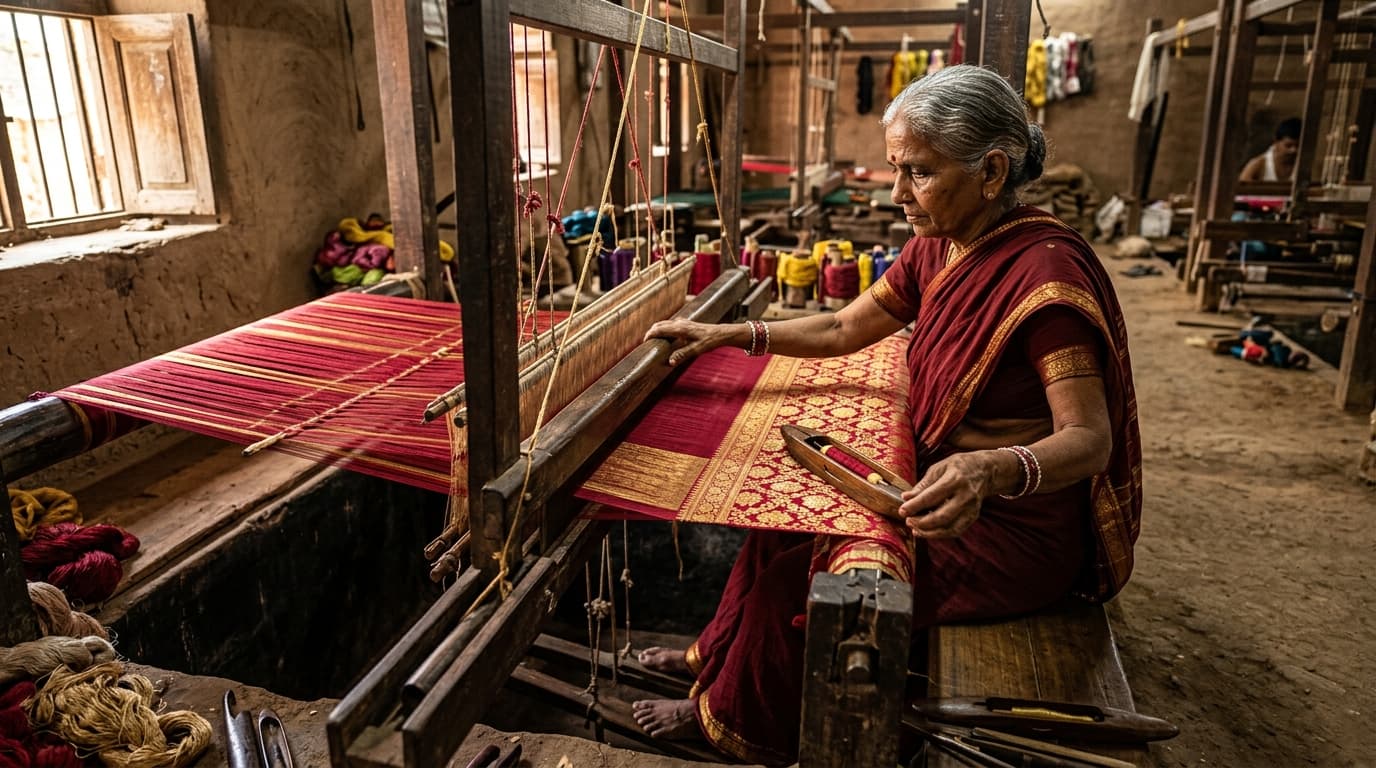
Power looms consume immense electrical energy and synthetic chemicals to force uniformity onto fibers. In contrast, an Indian pit loom operates purely on human breath, pedal rhythm, and patient muscle memory. A single handwoven saree requires anywhere from 15 to 40 days to manifest, producing near-zero carbon emissions throughout its lifecycle.
Fibers That Return to the Soil
True slow textiles are born from pure botanical materials: unbleached organic cotton, mulberry silk, madder root, indigo leaf, and tamarind seed mordants. When cared for properly, a handloom silk saree endures across generations as an heirloom. And when its century-long journey finally concludes, it returns harmlessly to the earth without leaving behind microplastics.
A machine weaves a thousand meters of uniform cloth a day. An artisan weaves two, infusing each warp and weft with human breath, prayer, and living geography.
— Noolvanam Handloom Archives · Living Tradition
Craft Specifications
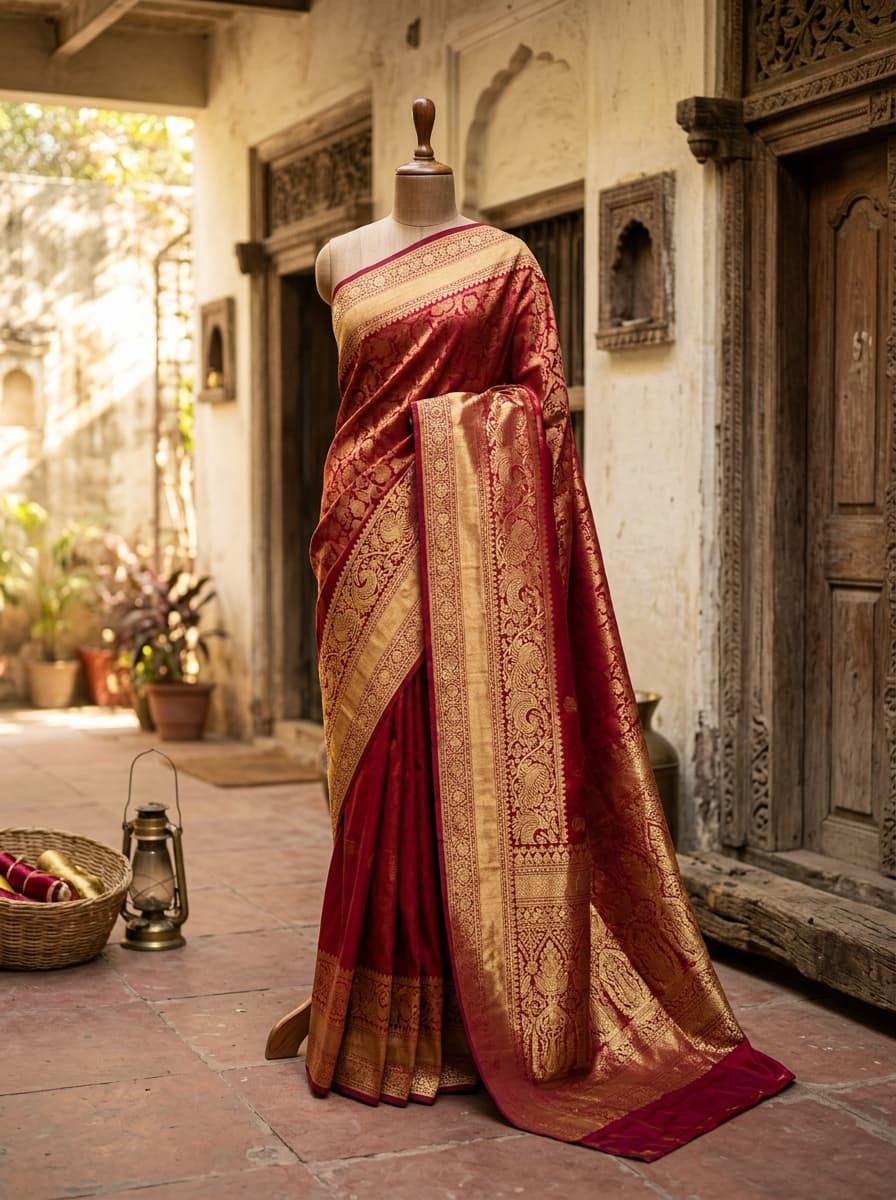 Handloom
Direct Guild Custodianship
100% direct artisan compensation, zero middlemen, and preservation of rare endangered weaves across Indian weaving clusters.
Read Our Guild Story